
Currently Empty: $0.00

 4x Braided Line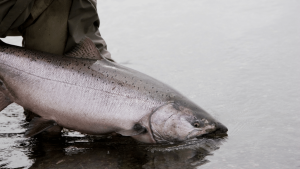
Targeting king salmon means gearing up for a serious fight. These fish are known for their size, strength, and powerful runs, especially in rivers or coastal waters during peak season. One of the biggest questions anglers ask is: what line size should I use for king salmon? Getting it wrong can cost you the fish of a lifetime. Getting it right means more hookups, fewer breakoffs, and better control when it counts.
Understanding King Salmon Behavior
King salmon, also known as Chinook, are not only the largest of the Pacific salmon species but also the hardest fighting. These fish can weigh over 40 pounds and make long, aggressive runs once hooked. They are found in both saltwater and freshwater, so the line size you choose depends on the environment, presentation, and gear.
Recommended Line Sizes for King Salmon
There is no one-size-fits-all answer, but here are some proven recommendations based on decades of real-world fishing:
- Freshwater River Fishing: 20 to 30 lb test mono or fluorocarbon, or 40 to 65 lb test braid
- Saltwater Trolling: 30 to 40 lb mono, or 50 to 65 lb braid with a mono or fluoro leader
- Float Fishing or Bobber Dogging: 15 to 25 lb mainline with 12 to 20 lb leader, depending on clarity
- Backbouncing or Drift Fishing: 20 to 30 lb braid mainline with a 15 to 25 lb leader
Chart: Common Line Sizes Based on Method
| Fishing Method | Mainline (Mono) | Mainline (Braid) | Leader (Fluoro/Mono) |
|---|---|---|---|
| River Casting | 20-25 lb | 40-50 lb | 15-20 lb |
| Trolling (Salt) | 30-40 lb | 50-65 lb | 30-40 lb |
| Float Fishing | 15-20 lb | 30-40 lb | 12-18 lb |
| Drift Fishing | 20-25 lb | 40-50 lb | 15-25 lb |
Mono, Fluoro, or Braid?
Each line type has strengths and weaknesses when it comes to landing kings. Here’s how they stack up:
- Monofilament: Easier to handle, some stretch for shock absorption, but more visible
- Fluorocarbon: Less visible underwater, good abrasion resistance, lower stretch
- Braided Line: Ultra-sensitive and strong, but highly visible and may require a leader
In most cases, braid as a mainline paired with a fluorocarbon leader is the go-to for many serious salmon anglers. This gives you the best balance of strength and presentation.
Why Line Diameter Matters
Line strength is one thing, but diameter plays a major role in casting, sink rate, and visibility. Braid offers thinner diameter for the same strength compared to mono or fluoro, but that also means it cuts through water and cover faster. On the flip side, thicker mono can be more forgiving when fish thrash near the surface.
Drag Settings and Line Stress
No matter what line you use, setting your drag properly is critical. A good rule of thumb is to set your drag to one-third of your line’s rated strength. So for 30 lb mono, a 10 lb drag is about right. This prevents breakoffs while still letting the fish run and tire itself out.
Realistic Expectations
If you’re fishing rivers with a lot of snags, go a little heavier. In clear water or when fish are spooky, you might need to scale down. Don’t get caught up in numbers alone. What matters most is matching your line to your technique, the conditions, and the fish size you’re targeting.
Leader Tips for Big Kings
If you’re using braid, tie on a 3 to 6 foot fluorocarbon leader. This will reduce visibility and give a little shock absorption. Use a knot like the FG knot or double uni to connect braid to fluoro without adding bulk.
When to Re-Spool
King salmon put serious stress on your gear. Inspect your line after every outing. If you feel nicks, frays, or see discoloration, cut it back or replace it. Don’t push your luck on a trophy fish just to save a few feet of line.
Final Thoughts
There’s no single perfect line size, but if you’re running between 20 to 40 lb mono or 40 to 65 lb braid with the right leader and setup, you’ll be in good shape. Adjust based on your water type, technique, and conditions. Experience counts more than guessing, so always test your rig before the big trip. Check our braided lines for fishing line options on your next catch.

